

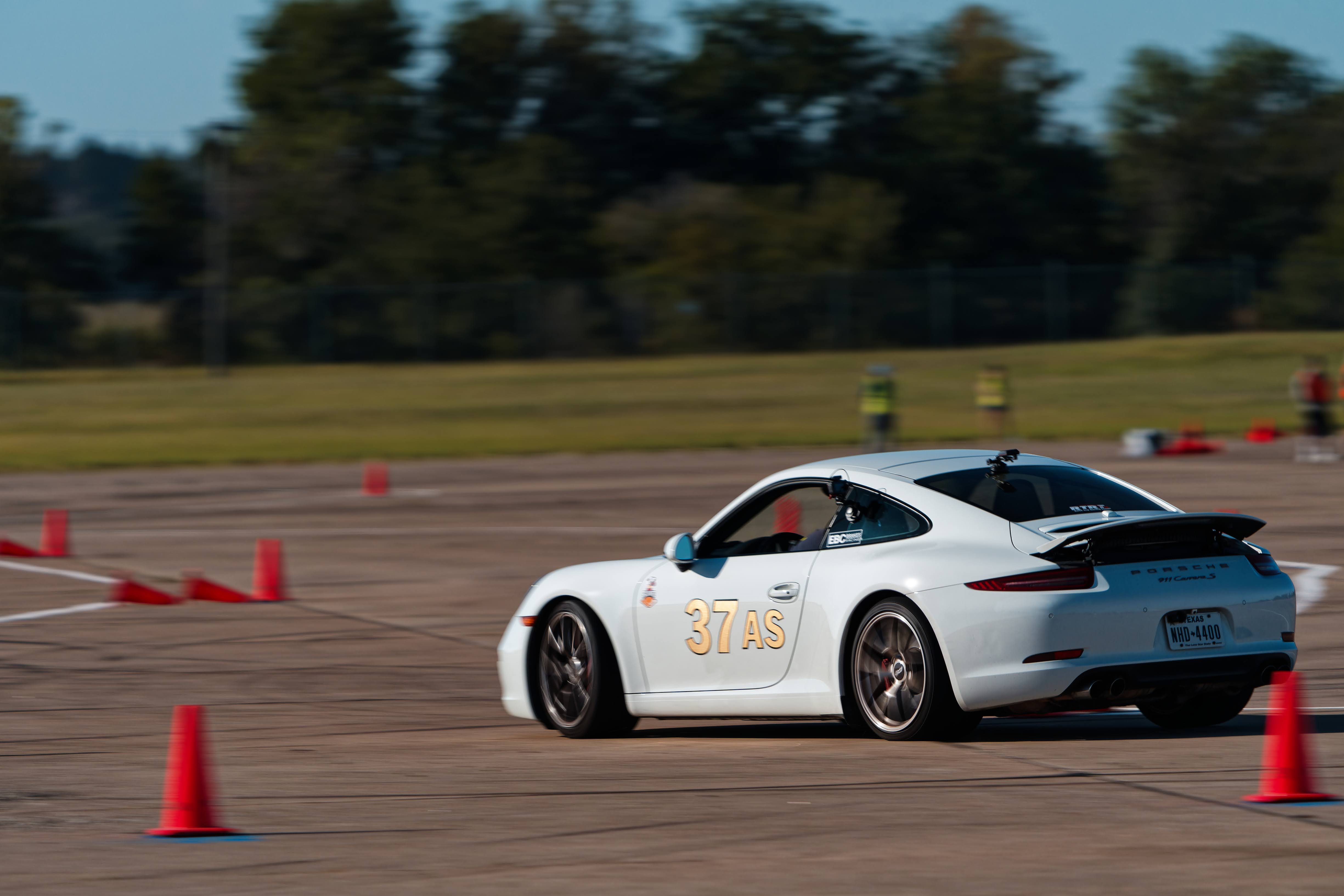
Photo by Sports Car Club of America
Photo by Sports Car Club of America

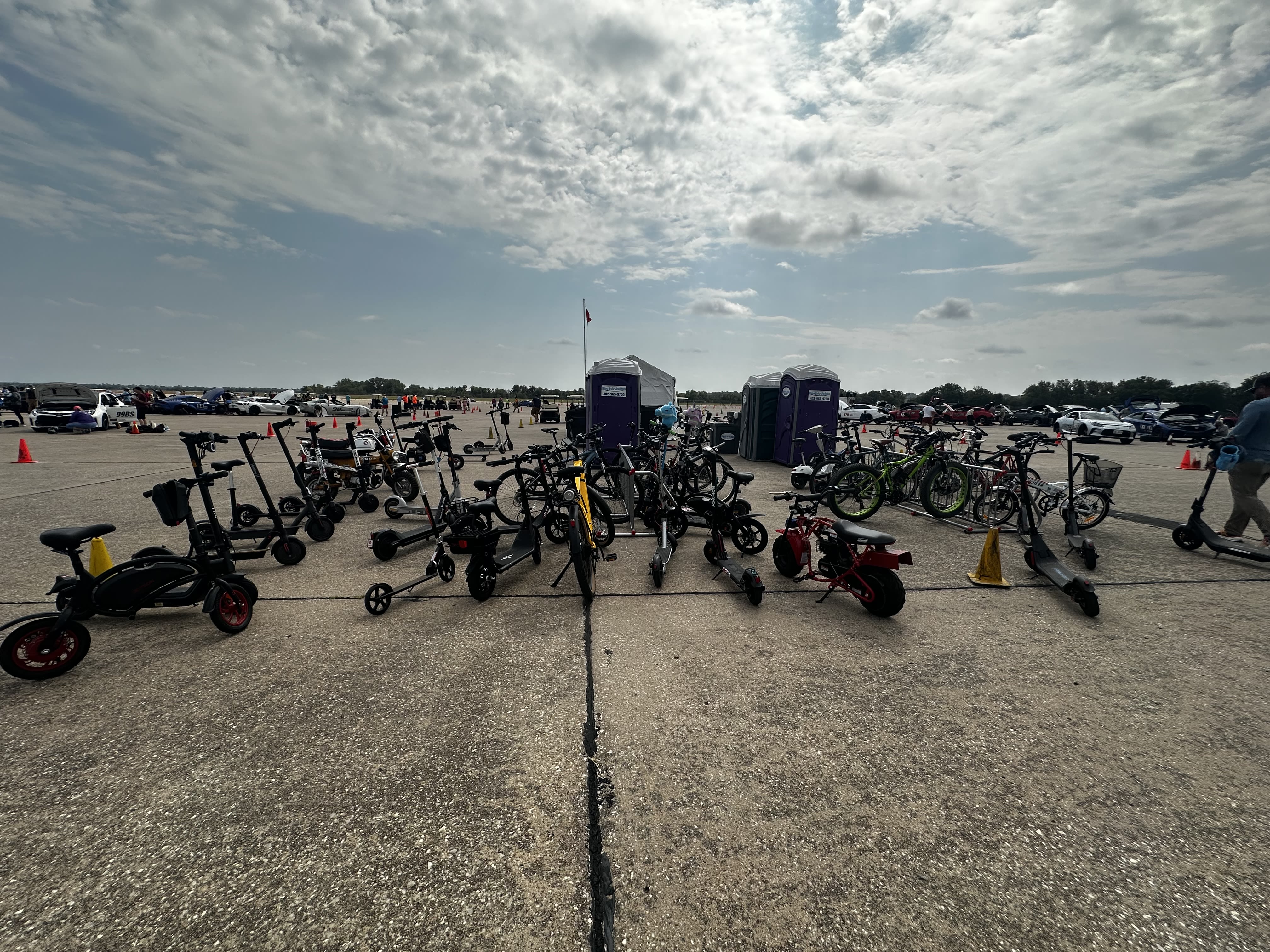
Photo by Steven Tellman
Photo by Steven Tellman

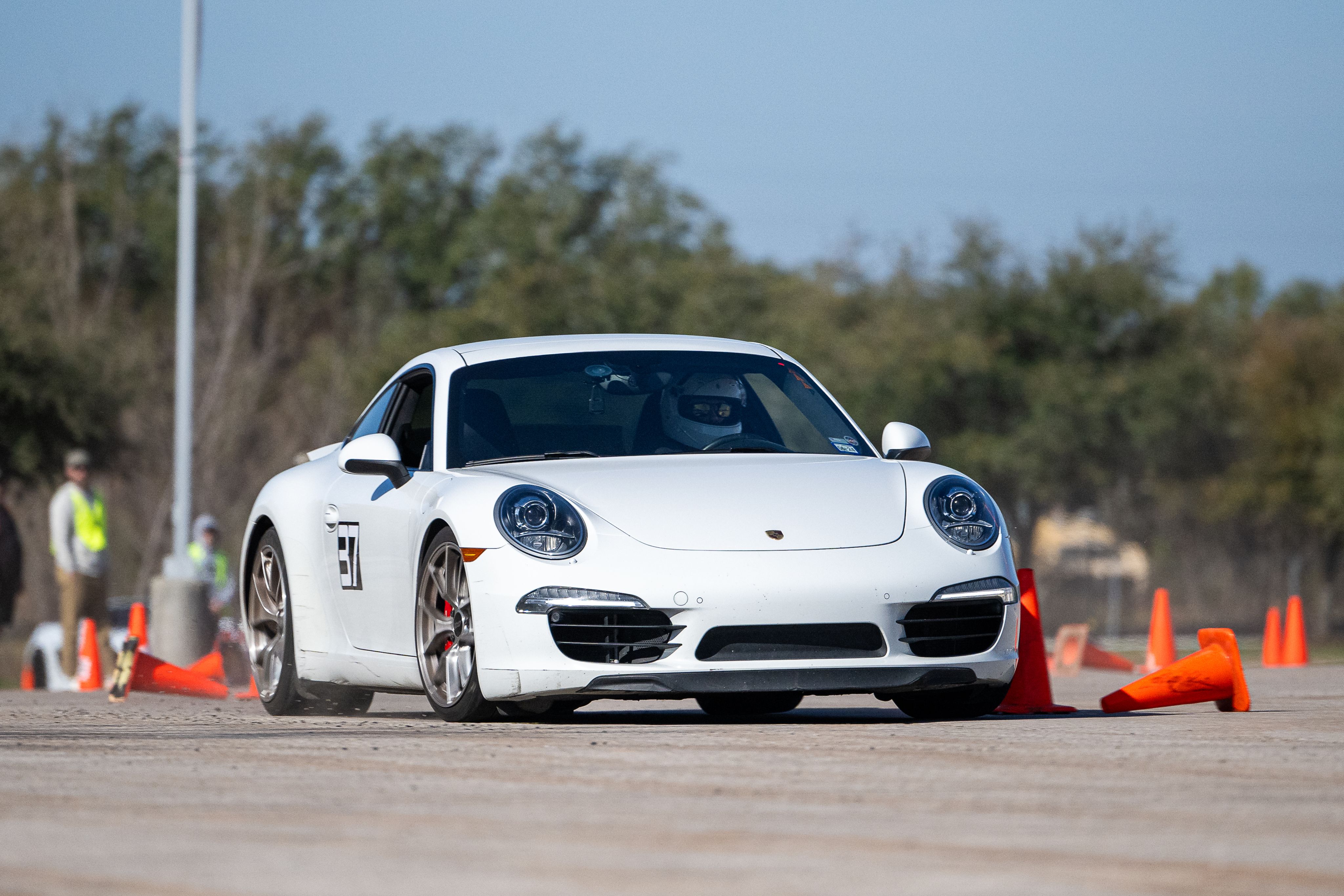
Photo by Eduardo Moll
Photo by Eduardo Moll

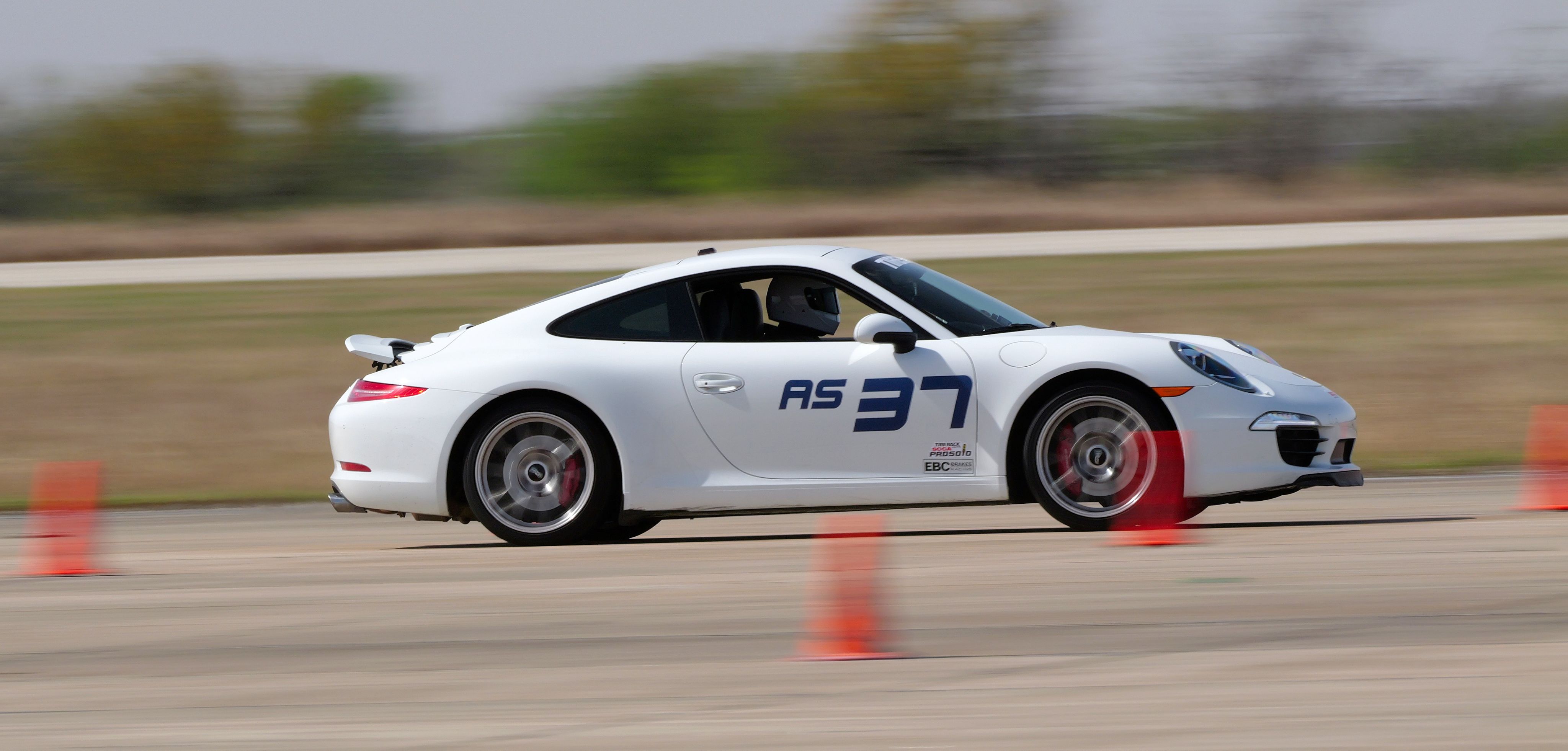
Photo by Tim Harper
Photo by Tim Harper

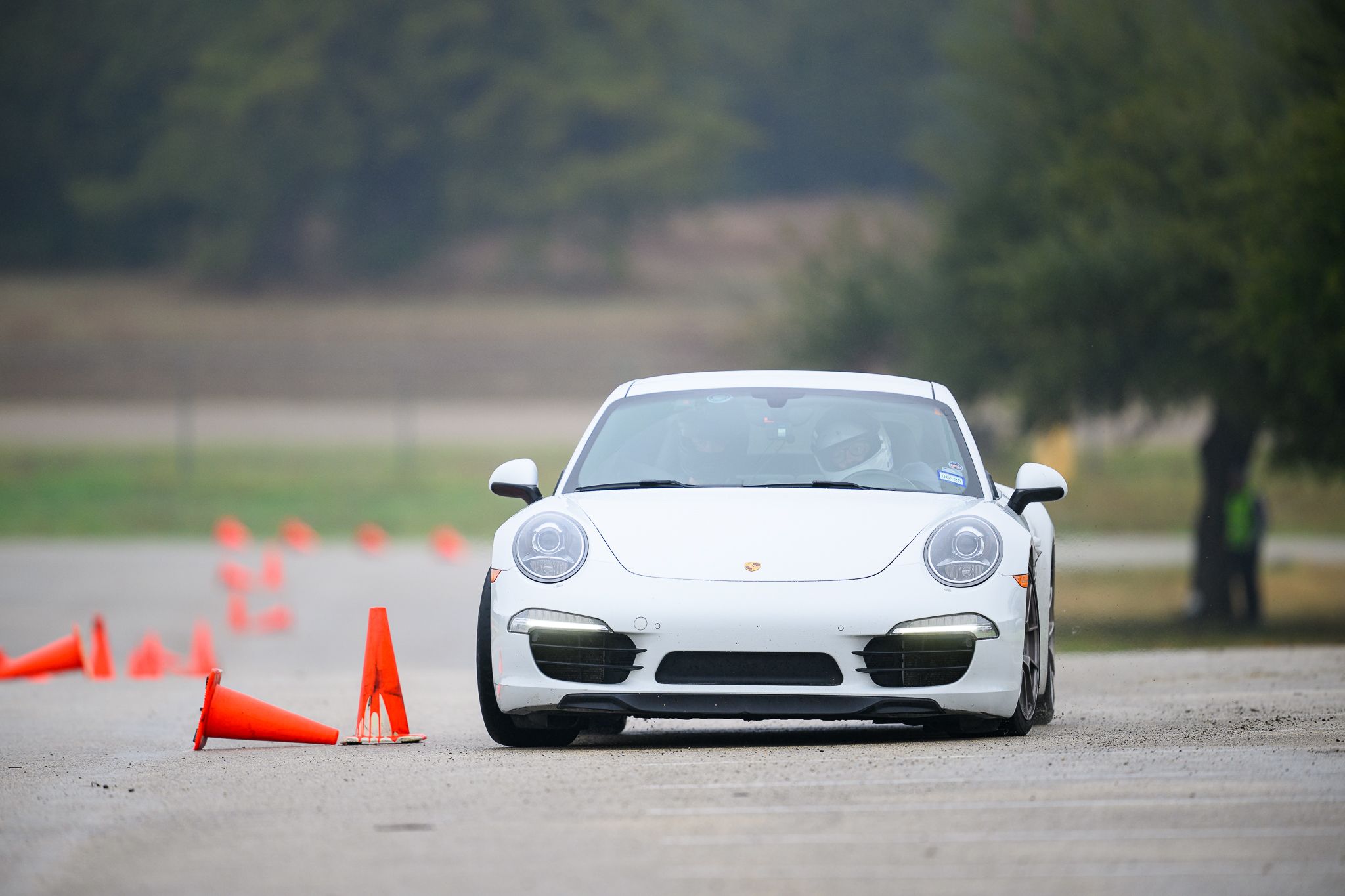
Photo by Eduardo Moll
Photo by Eduardo Moll
Autocross Nationals
Written by Steven Tellman
It all started in 2002, when I bought a brand new Subaru WRX Wagon. I learned how to drive manual transmission in the dealership lot. It was trial by fire, but I learned quickly.
The WRX opened a whole new world to me, introducing me to new friends and offering a chance to be involved in actual motorsports. I started autocrossing with the local car club Spokes in 2002. After a 12-year break from autocross, during which I focused on track days, I returned to Spokes in 2021 after the purchase of my 2013 911 Carrera S and dove in head first.
There are two main types of autocross in the U.S. as defined by the SCCA. Solo, which is the autocross we know and love, and ProSolo. ProSolo is a two-course, mirrored, heads-up drag race start autocross. It’s unbelievably fun.
I mainly run with the Sports Car Club of America (SCCA), the Porsche Club, Texas Spokes, and the San Antonio Sports Car Association. These clubs make up the bulk of the autocross in Texas.
What makes SCCA National Autocross competition different from a local event? In reality, not much, but the three things that really differentiate them are talent level, site where the course is run, and the run format.
The level of talent at National events varies from novice to multi-time National Champion winning drivers. While surrounded by people who are likely better than you, you can look at it two different ways. There’s the “I don’t want to be last,” and avoid going, or there’s the “I want to challenge myself and improve,” and try and learn from the best. I will always choose to use the opportunity to improve and will ask for better drivers to ride with me or look at data. Always take an instructor if one is available! I’ve made large strides in performance by getting a different viewpoint on my driving. National events are for everyone, no matter their skill level, so take the opportunity to drive at one of the best sites in the nation in Beeville, Texas with the SCCA.
If you’ve been running with the Hill Country Region PCA lately, you know we’ve gone through a few sites at this point and ultimately landed at the Travis County Expo Center. While that site is convenient and provides enough room, drivers are running in the mid-to-low 30-second range. For comparison, the site that the SCCA uses in Beeville, is an old World War II airplane facility. This allows for nearly 70-second courses with speeds approaching 65 mph at the finish line.
The ability to really open up your Porsche and explore higher speed transitions gives a whole new aspect to autocross. The course layout of National events is also a little different from regional events. Fewer cones, more reliance on looking ahead, and a mixing of inputs are hallmarks of a National level course. While this can be intimidating at first, you’ll quickly adjust and other courses will feel slow in comparison!
When running an SCCA National event, the run format is slightly different. A National event is typically two days of competition, with a different course each day. While locally the PCA will get at least 8 runs, the National format is 3 runs per course. This means you have a total of 6 runs, and your two fastest runs are added up for your total time. This pushes you to learn courses faster and go quicker sooner in the run cycle.
The ultimate event in the SCCA’s Solo calendar is Solo Nationals in Lincoln, Nebraska. It’s always the week of Labor Day and it’s a week of competition, parties, friendly trash talking, and camaraderie. Think of it as Burning Man for autocross and on a massive airport facility instead of a desert. Nearly 1,400 competitors descend into Lincoln with a huge variety of cars, daily driver Civics, tube frame Camaros, and lots of beautiful Porsches. The Lincoln Airport is another WWII site where the SCCA rents 20 acres of concrete for us to compete. The site is so big most people get around on electric scooters, bikes, and golf carts.
My first Solo Nationals was in 2024 and it was an eye-opening experience. Driving up my 911 from Austin to Lincoln was a bit of a chore, but I broke up the drive by visiting family on the way. Arriving on site Sunday afternoon, I parked in my assigned paddock spot and unpacked while seeing friendly faces roaming the paddock. I wasn’t competing for two days, but still had things to do like getting tech inspection done and checking into registration. Sunday night was capped off by a party event called the “Big Wheel ProSolo” hosted by the Texas Spokes crew. It’s basically a ProSolo style autocross event but with adult size Big Wheels. That was a ton of fun, and one of the first parties of the week. Monday is an “off day” so no competition but allowed me to spend some time on the practice course to get a feel of the concrete surface. It also gave me the opportunity to walk the courses to familiarize myself with the flow and tricky spots. Monday evening, a party was held where five SCCA regions cooked food allowing attendees to sample their local fare. I went to sleep slightly early to make sure I could get a course walk in before competition started at 8:15 a.m. the next morning.
Competition days at Solo Nationals are the most fun. No matter if you are driving that day or not, there’s always something going on. For me, I was running early in the morning so I could focus on my driving before getting caught up in everything else going on at the site.
Tuesday runs went decently; my fastest run was my third. The course was a great blend of speed and technicality, forcing me to focus on line choice and really trust my Porsche’s traction coming out of corners. After inspection and waiting for any protests of results, drivers were free to return to the paddock. After calming down, I had to work the course to pick up cones. The day ended with a party in the paddock with a beer exchange that showcased different beers from all over the nation.
Wednesday runs also went decently and I picked up 1.3 seconds on my second run, which ended up being my fastest run. This course was much faster with more space between elements and allowed for higher speeds. With those higher speeds, drivers were pushed to control their braking and steering input, ensuring both were smooth. At the end of the second day, I was unfortunately out of the trophies by 0.367 seconds. It was a tight competition! I celebrated with the trophy and podium winners, then returned to the paddock for a rest before getting ready for work. Once competition was over, the paddock lit up again with music and an ice cream social for everyone.
I stayed until Friday to help other competitors but then started back to Austin. About 12 hours later, I was back home with fond memories of my first Solo Nationals. My 911 treated me well the entire experience, from providing a comfortable drive up and back, to offering me a platform that can compete with the best in the nation. Our cars really can do almost anything! Want to get involved in higher levels of autocross? Porsche Club of America does autocross at Porsche Parade, an event that brings competition from around the nation.
If you want to get involved in SCCA National level autocross, check out the SCCA’s website and explore their autocross program or find me at your local Porsche Club event (or the HCR Discord!). ■



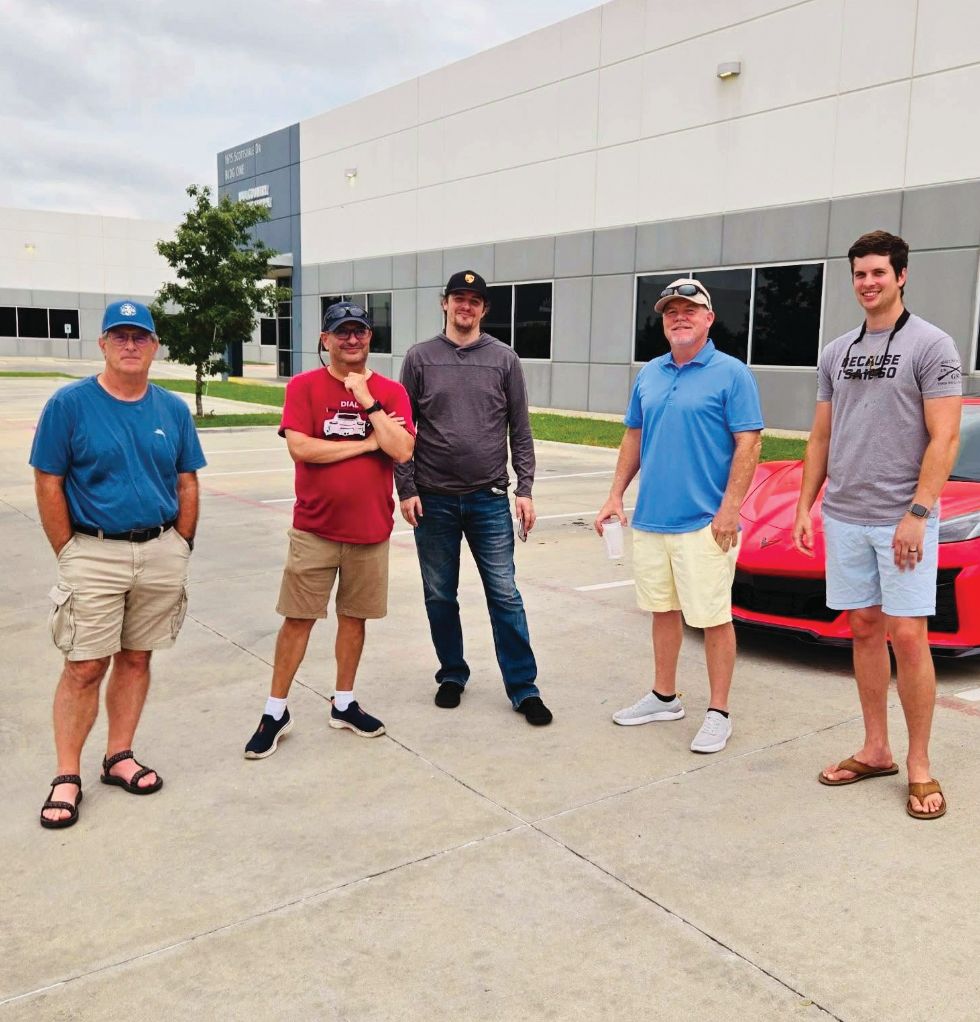

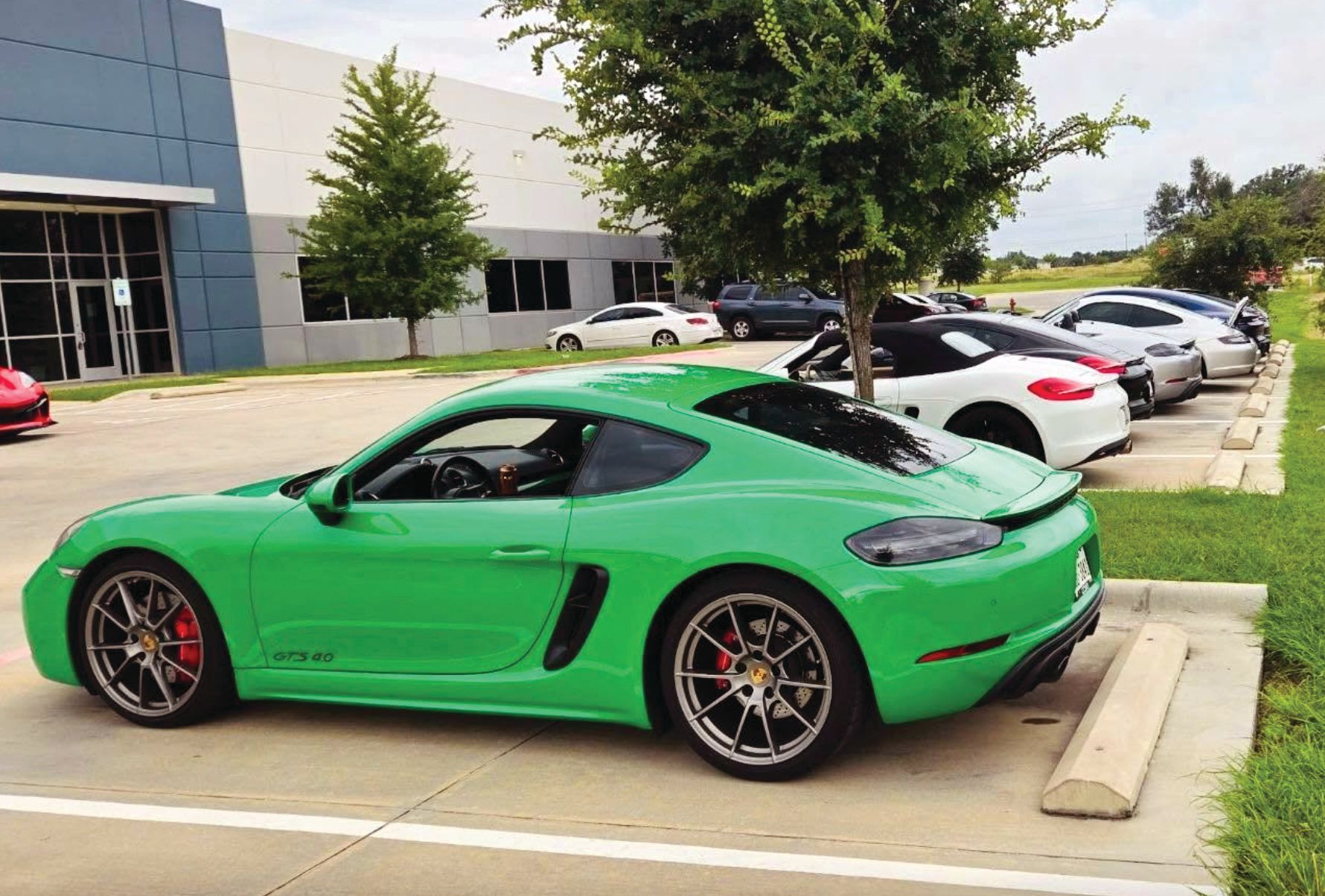

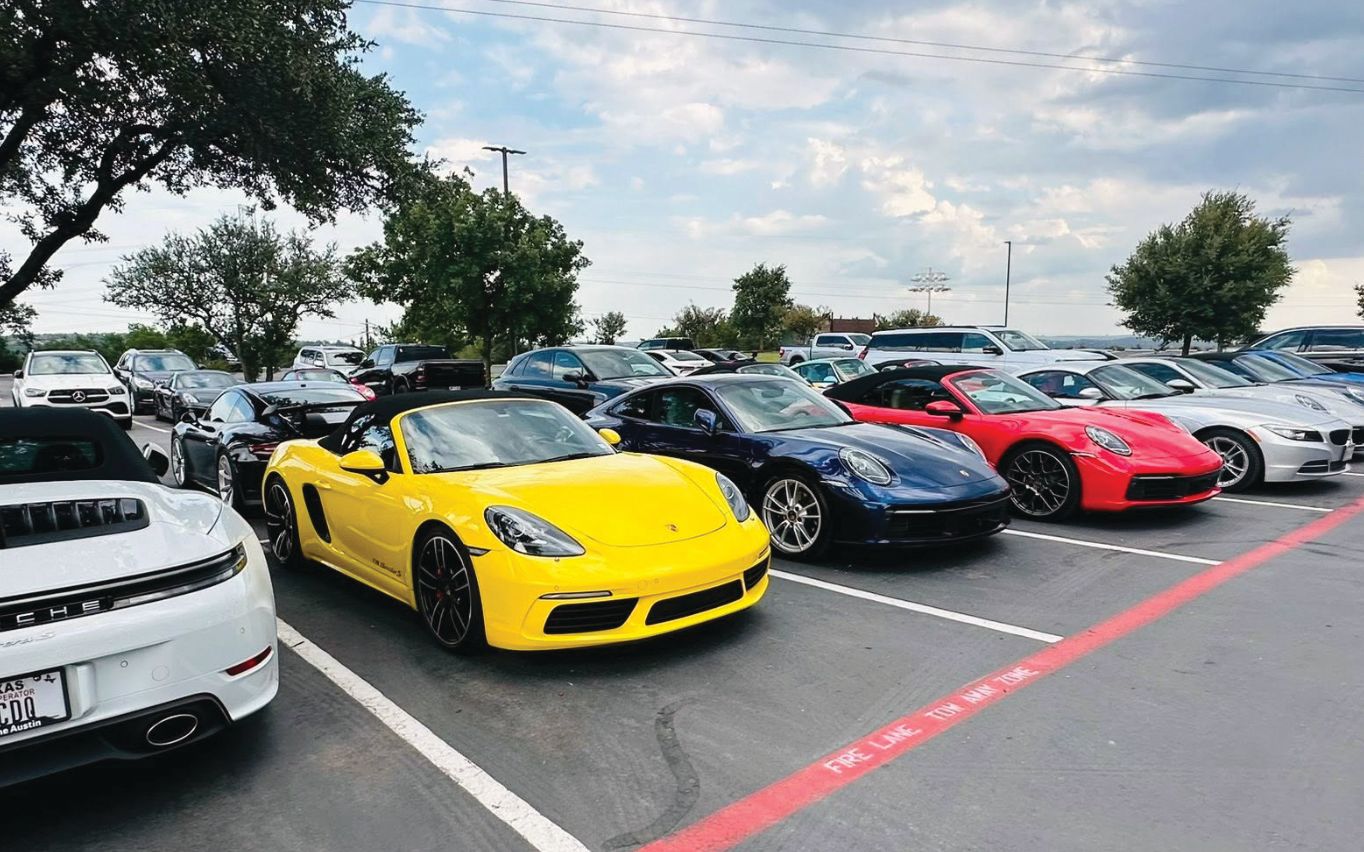

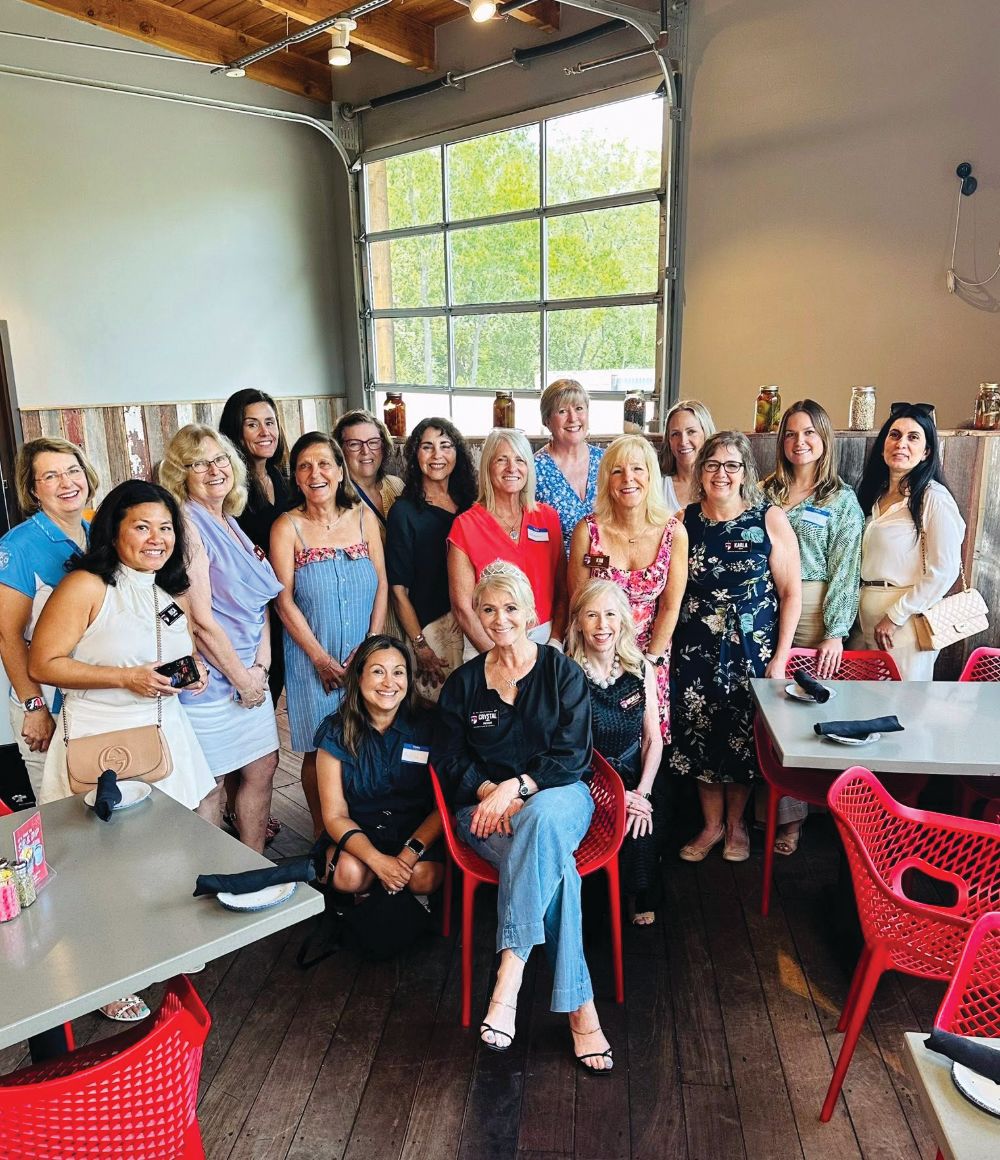

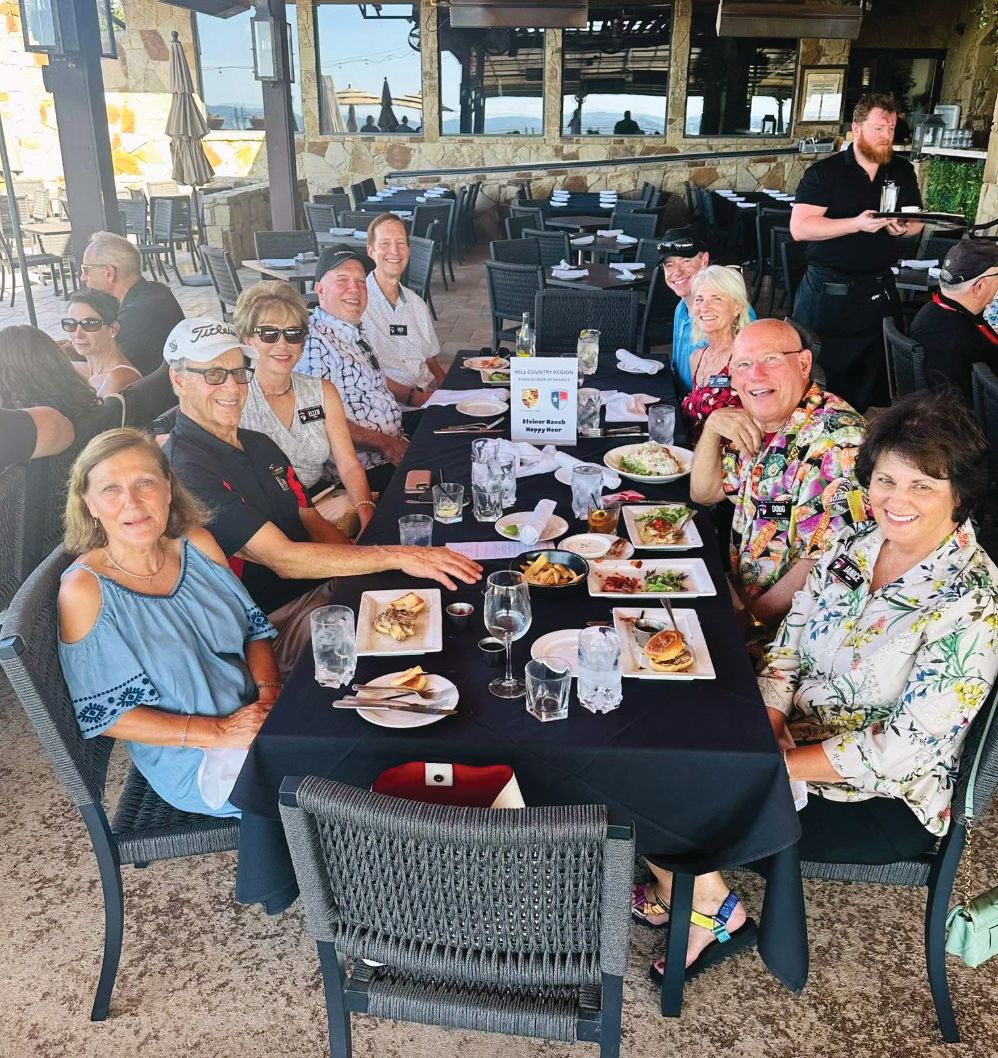

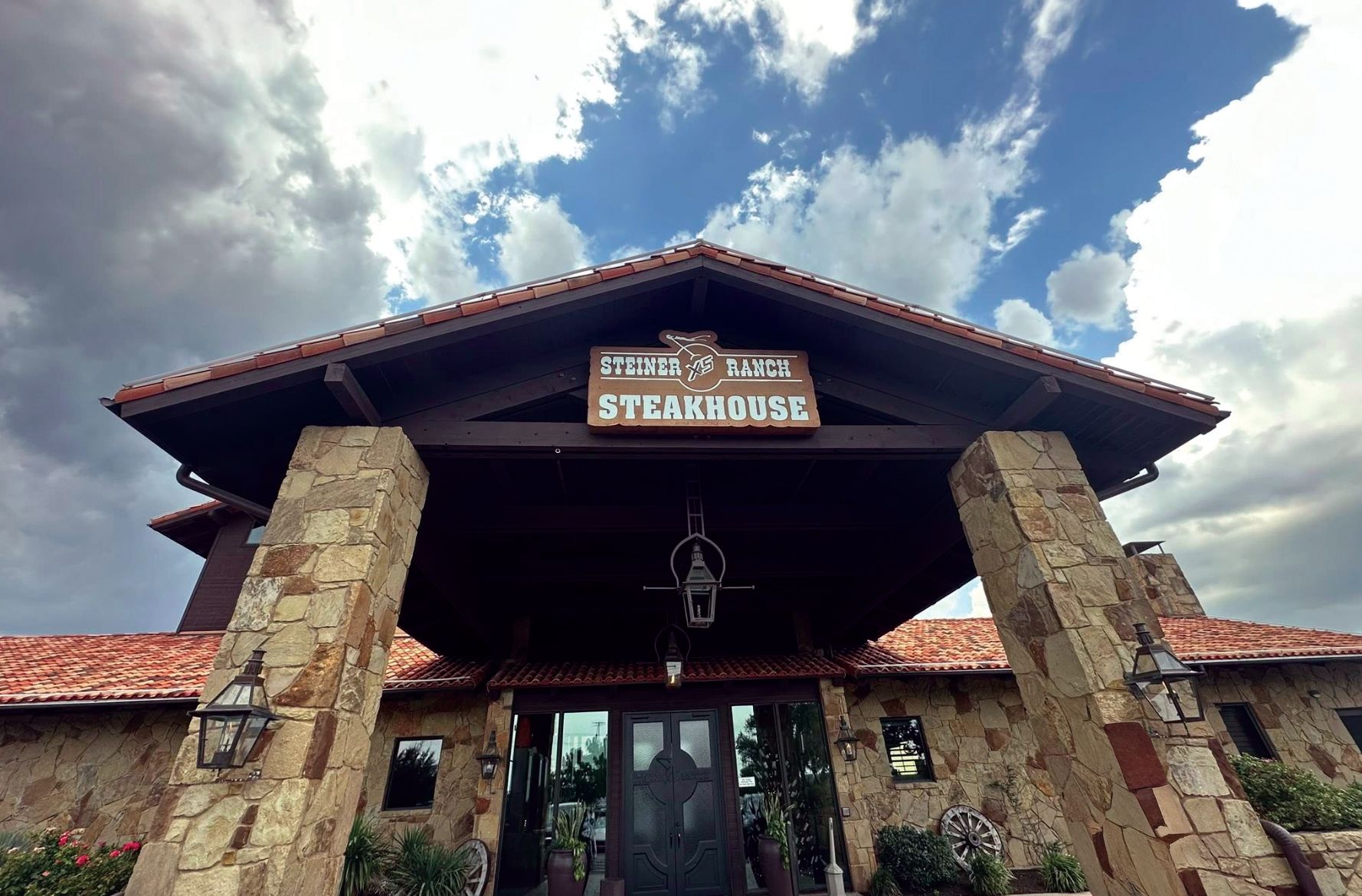
The Hill Country Region prides itself on the number of events offered to members. Ranging from weekend drives, informal get togethers or giving back to the community through various volunteer events. The following images are from these events. We hope to see you out and about in the future!


For the most up to date information, scan or click on the QR code above to view the events calendar on the HCR website.
For the most up to date information, scan or click on the QR code above to view the events calendar on the HCR website.
The informal get-togethers on Sundays at different locations throughout the area are gaining in popularity each month!
We had an amazing Ladies Luncheon at Jack Allen’s on Anderson Lane. It was held here in honor of our current President Crystal Zarpas. This was the very first event she attended years ago which jump started her journey with HCRPCA! We’re so happy to have her as our President. Ladies Lunch are always the 1st Wednesday every month!
Happy Hour at Steiner Ranch Steakhouse continues to please! Thank you to all the 43 members who attended in the TX heat! We were able to enjoy beautiful views of Lake Travis and of course visiting with our fellow members. Our Happy Hour is always the 4th Wednesday of every month from 4-7.

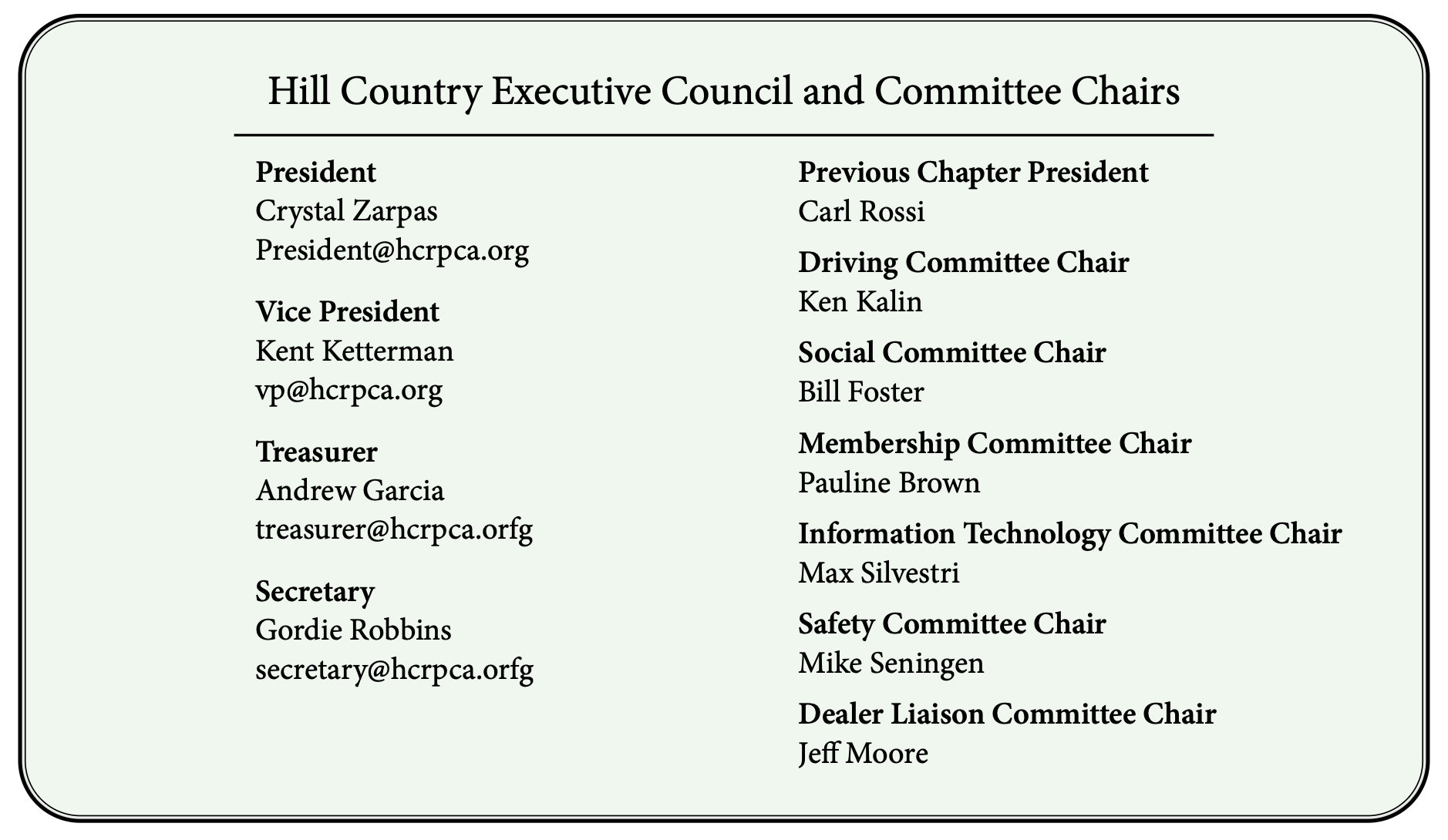

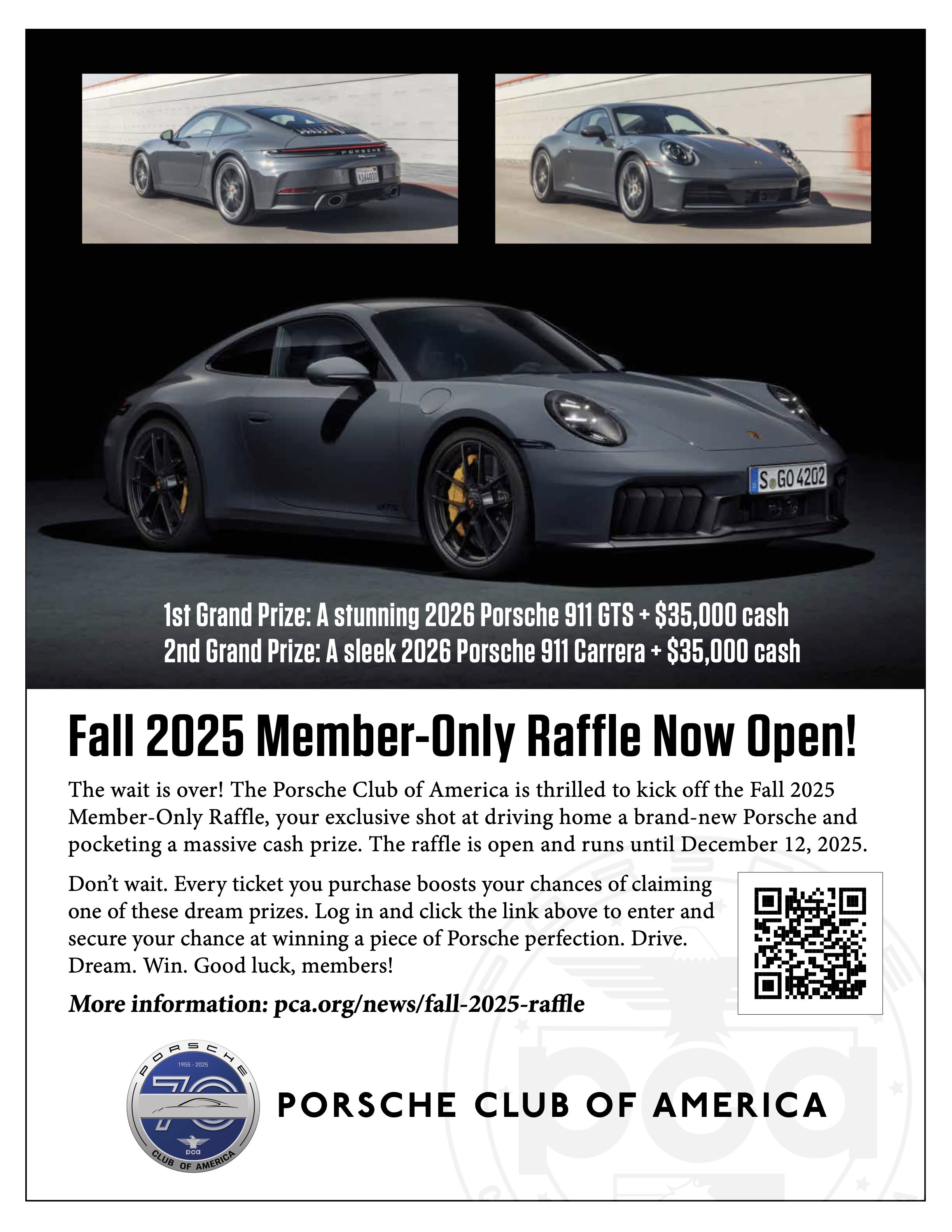


Getting Out of the Zone
By Wendy Shoffit, Zone 5 Representative
Most PCA members really have no idea just how big PCA is. Did you know that we have over 167,000 members? We started with only 190 charter members back in 1955 and have grown tremendously over the years. We are the largest single marque car club in the world. What started out as only one region (Potomac in the Washington, DC area) has now become 149 regions across North America.
While initially it was a challenge to get enough people organized to form regions, by the end of 1967, there were 67. By 1969, the executive council decided that the regions needed to be organized into zones. At first there were only 8 zones and we now have 14. Organizing this way gives the region presidents a communication liaison (AKA Zone Representative) to work with and be heard. Zone 5 is made up of most of Texas and Oklahoma, and all of Arkansas and Louisiana. We are in Zone 5 and I am your current Zone Rep.
When you signed up for PCA, you probably had no idea of any of this. You probably didn’t know when you gave your address that you were going to be automatically assigned to a region and a zone and have a representative. Shortly after signing up, I’m sure you started getting emails, letters, phone calls, and/or a newsletter from your local region, inviting you to attend local events. Hopefully, you started joining and appreciating what your region has to offer. The more you put into this club, the more you will get out of it.
Did you know that you can attend events even outside of your region or your zone? You are not pigeonholed into just going to your region’s local drives, even though they might be spectacular! You have the ability to see what other regions and zones across the country are doing and be able to participate! I’ve been a member for 28 years and have been to more PCA events than I can count, including local, zone, and national ones. I’ve had an absolute blast doing so! Events across the country can be some of the most fun, as your participation from a distance can be very unexpected!
Check out the PCA website for some events that have been listed across the country. https://pca.org/events/. I’ll give you some examples of events. Many people in our Zone know about PCA Palooza in Eureka Springs, AR (Nov. 5-9) put on by the White River Region. It’s an amazing weekend with 37 tours available on some of the most beautiful roads!

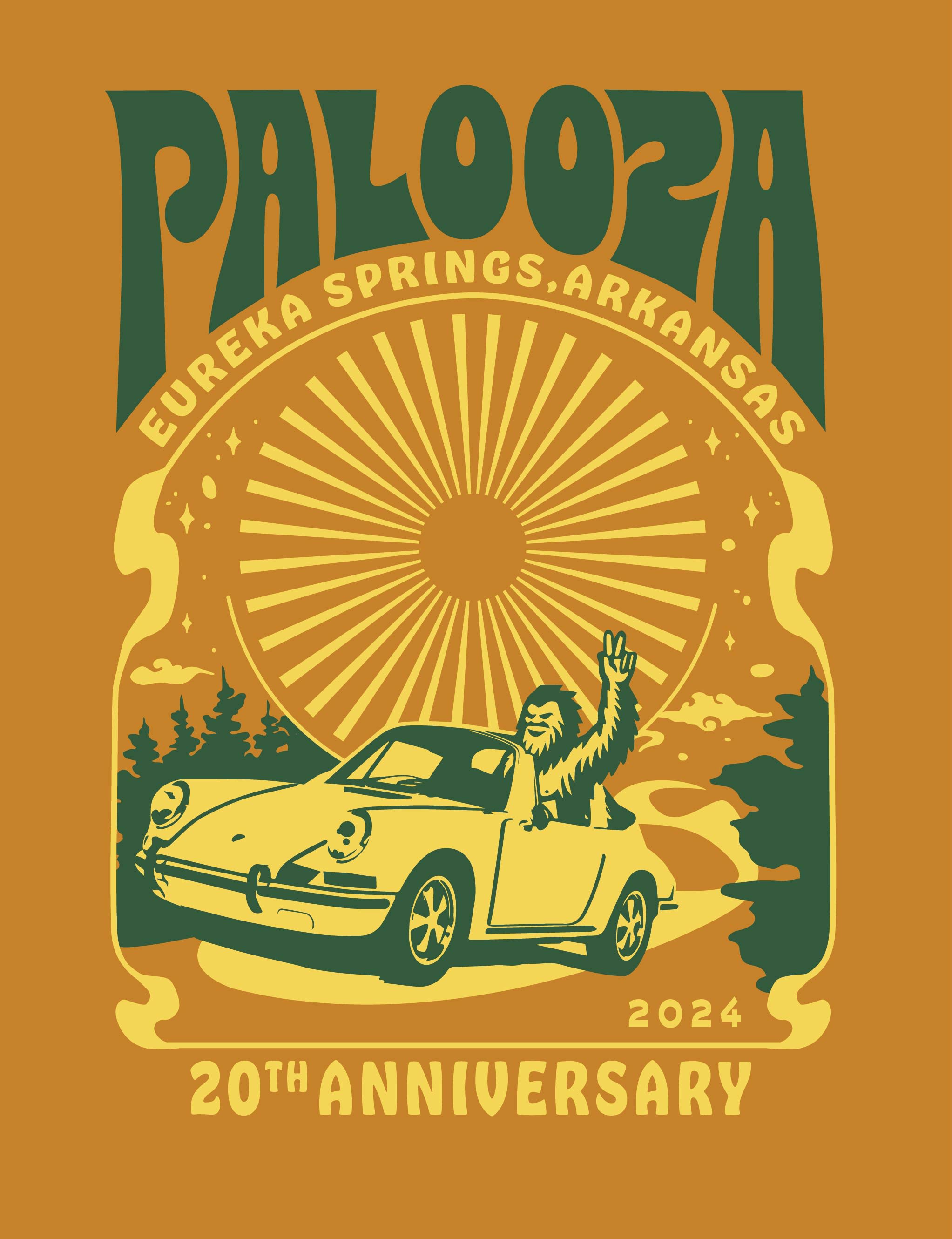
The Wilderness Trail Region in North Carolina put on DrachenFest every year (Sept 11-14) that includes driving legendary roads like Tail of the Dragon. Roadrunner Region invites us to their Fall Foliage Tour (Oct 10-12) in Angel Fire, NM that will include beautiful drives around the Enchanted Circle.


How about an HPDE event at Road America or Laguna Seca? Add to that the national events like Parade, Treffen, Ünstock, and Werks Reunion and you will get your fill. Look through the calendar to find something that interests you! Don’t just stay in your own regional bubble! This country is huge and there are so many opportunities to experience in your favorite vehicle. Bring your old friends along and make some new ones! ■







Horizons Advertising Index


PIT STOP
What exactly is a Tune?
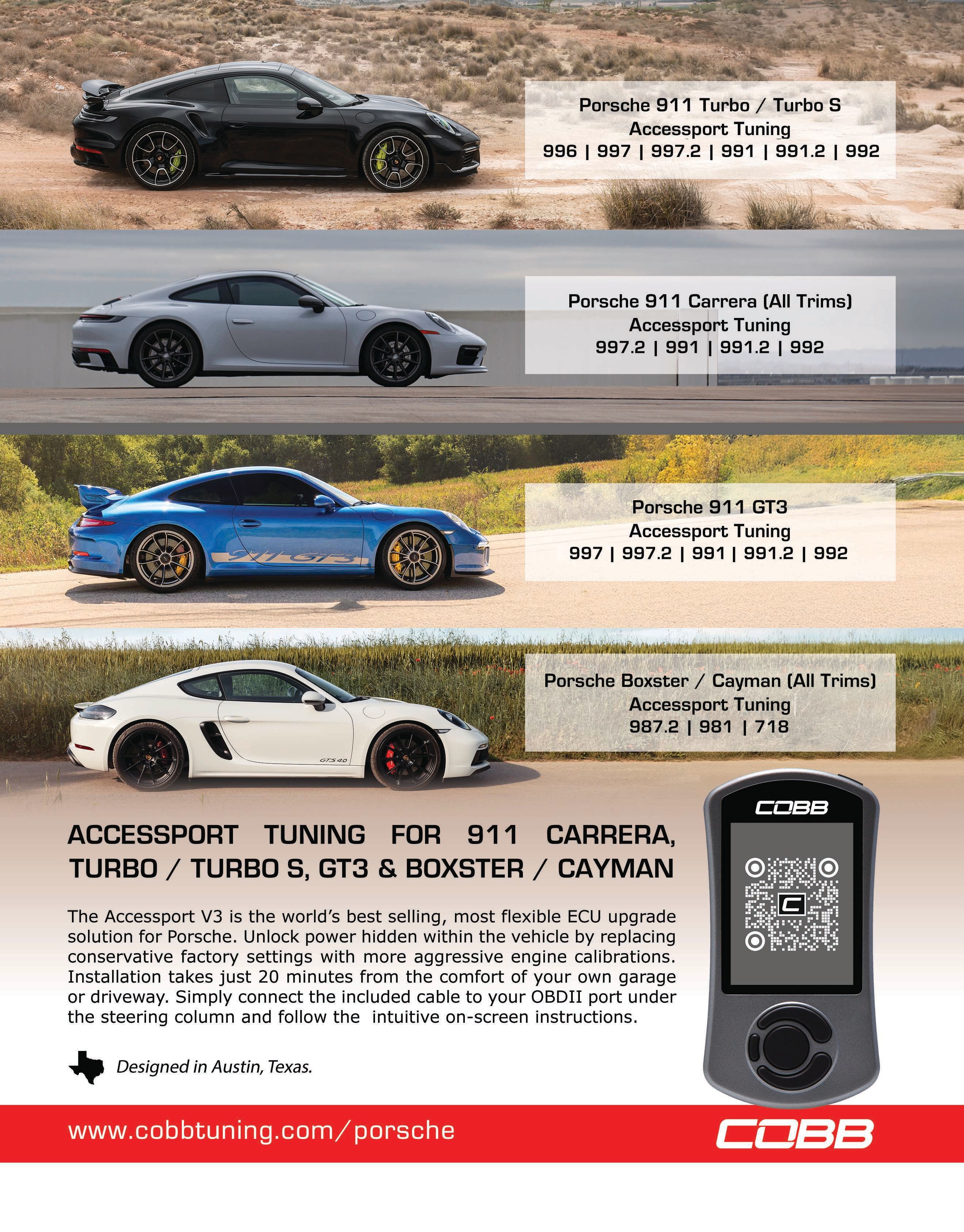
Written by Drew Schwarzkopf, Photos by Cobb Tuning
Vehicles are becoming increasingly complex with dozens of electronics modules all communicating at calculation speed that would put our RPM limits to shame. In days past, a new car could be tweaked with nothing more than a bag of tools and some easy to learn knowledge. These days, it feels more like you need a degree in electrical engineering or computer science to change nearly anything on a car. Tuning your car certainly requires a lot of background knowledge but dozens of companies and performance shops are available to bring this science home to drivers in an easy to digest manner. So how does it all work? And how can anyone enjoy modern car tuning to truly push the limits and even break through them?
My name is Drew Schwarzkopf and I’ve been enchanted by figuring out how things work my entire life. I’ve built a career as a Vehicle Calibrator at COBB Tuning where I work to reverse engineer and tune Porsches, Volkswagens, Audis, Subarus, and Hondas. I’ve worked on everything from racecars to daily driven monsters making over 1000 horsepower. My current project car is a 2003 911 Turbo (996TT) modified with bigger turbos destined to make about 700 horsepower when I’m finished.
The central brain of every electronic fuel-injected car is the ECU. Known by many names (ECM, DME, PCU, etc.), the Engine Control Unit is responsible for coordinating communications in the car and telling the engine what to do. It reads data from hundreds of sensors and inputs this data into thousands of control tables commonly referred to as ‘maps’ to determine an output. There are control tables for commanded torque, airflow, fuel injection, and every function in the engine so everything runs smoothly. When working on a modern car, manipulating these tables in a few ways can increase engine output or allow modified parts to work as intended. The simplest and most common method of modification is known as reflashing. Reflash tuning is praised for its simplicity and the ability to retain factory functionality, as well as the ability to easily revert changes back to factory settings.

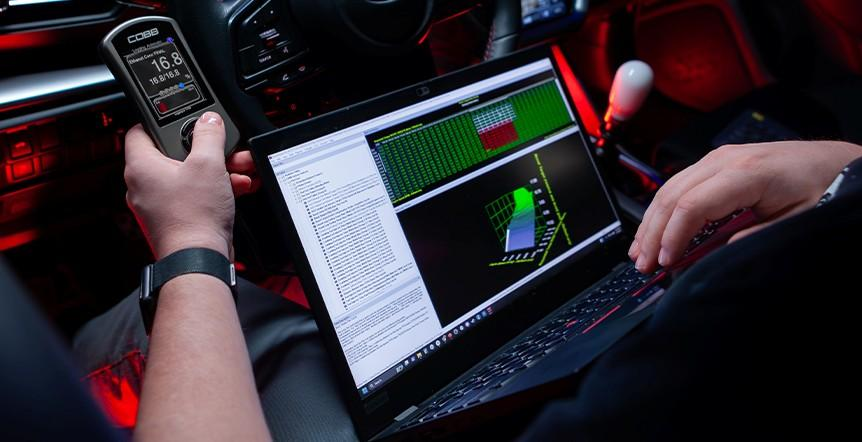
Tuning is usually accomplished by a calibrator with a laptop sitting in the car while analyzing data.
Tuning is usually accomplished by a calibrator with a laptop sitting in the car while analyzing data.
Most cars that utilize electronic fuel injectors will have some sort of ECU. On older models such as a Porsche 944, we’re typically limited to a dozen or so control tables, mostly controlling fuel only. On newer models, we can tune the ECU for more engine power, the transmission control module for enhanced transmission shifting, or even the body control module for fine tuning suspension and traction control. Even hybrid and electric vehicles can be tuned. Many Porsche shops even utilize the Porsche factory computer (PIWIS) to adjust settings for minor changes. When tuning a car, more horsepower might be the first goal one thinks of, but the entire vehicle can be calibrated. A tuned car doesn’t always need to be a racecar; it can sometimes be a daily driven Cayenne where the owner just wants some more power when they stomp on the pedal. Tuners will take care to tune the car to the liking of their customers.

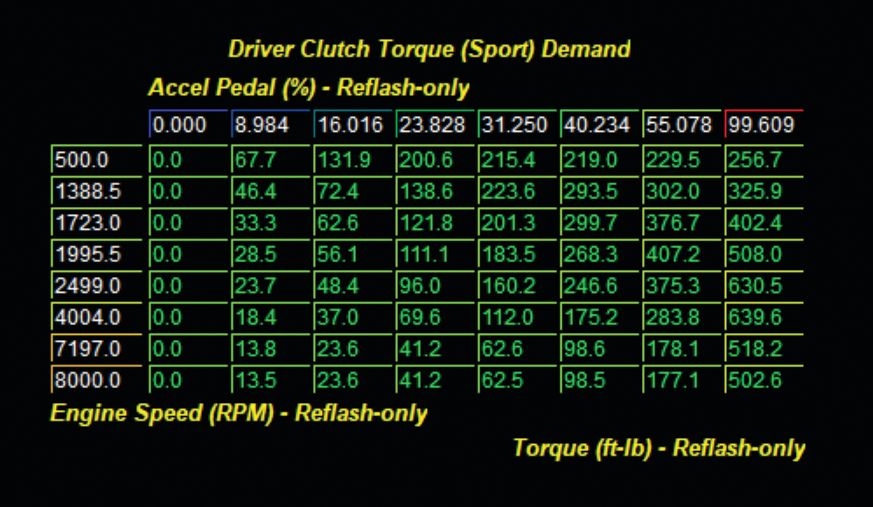
An example of a control table in the ECU of a 992 Turbo S. This table uses RPM and Accelerator Pedal Position as inputs to determine a torque target for the engine.
An example of a control table in the ECU of a 992 Turbo S. This table uses RPM and Accelerator Pedal Position as inputs to determine a torque target for the engine.
On the surface, this might sound like it’s bordering on sacrilege. Why would some tuner in a garage think he knows better than the team of engineers at Porsche, BMW, or Ford? The simple answer is that engineers don’t solely decide how fast or powerful to make a car. Vehicles are typically designed below their actual abilities to sell for a specific price and custom tuning can be a cost-effective approach for owners to unlock that potential. A knowledgeable tuner will ensure that factory limits are only raised enough for the desired output and not simply disable the protective thresholds and safety software on the vehicle.
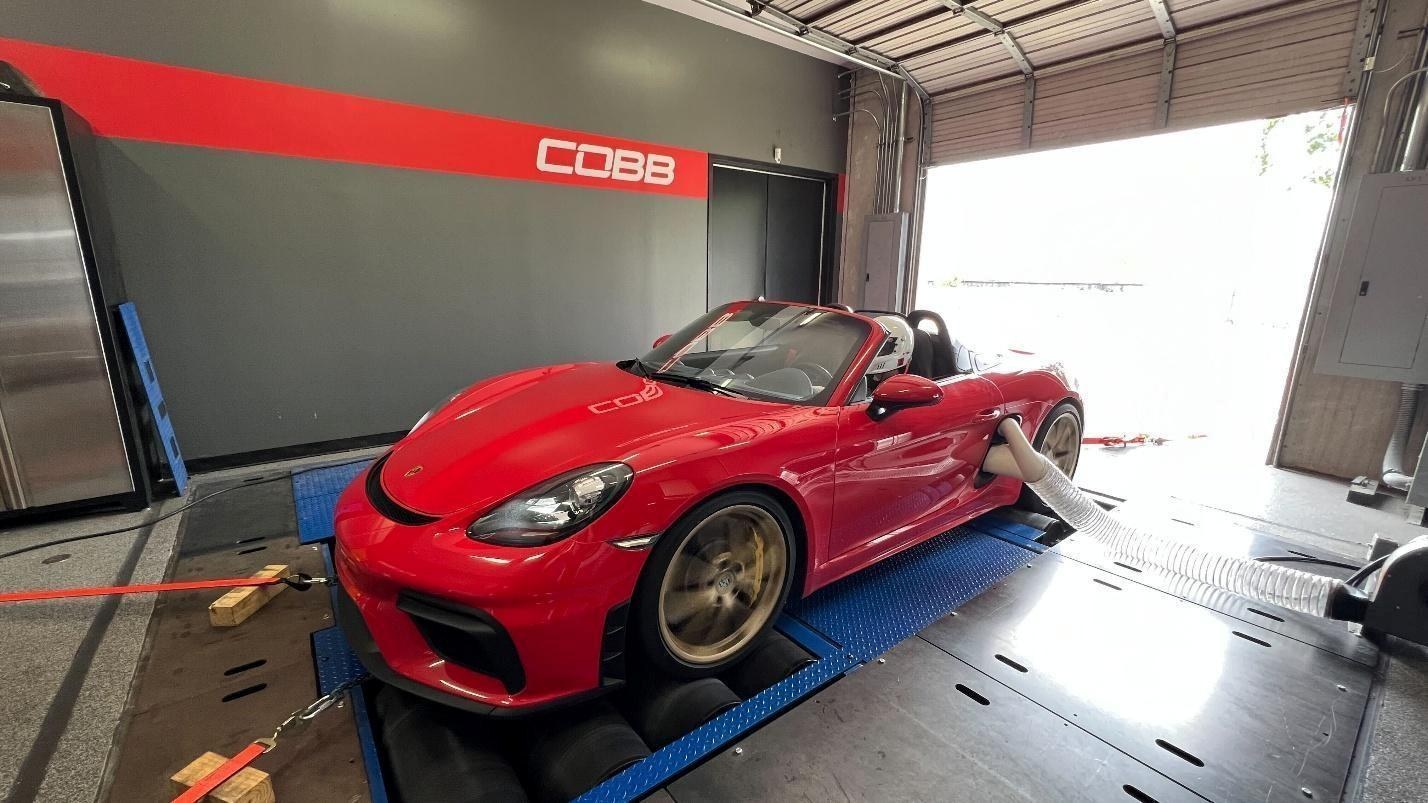
Fortunately, drivers and owners rarely need to dive and make calibrations themselves without help. In a two part method, aftermarket companies have already done the difficult task of navigating ECU security and while technicians develop the files specific to each car. Many companies offer at-home flashing, allowing owners to connect to a car via a cable in the OBD-II diagnostics port and then follow instructions in a laptop program or handheld to reflash the ECU. This removes the guesswork and ensures that mistakes aren’t made. For more complex projects, a dynamometer can be utilized to make fine adjustments to engine and transmission mapping for specific use cases. It is even possible for a technician to successively update a vehicle's mapping through email based on data logged through driving the vehicle. With so many customizable settings, it’s worth noting that tuning can’t fix mechanical problems on a car. If you’re getting poor fuel economy due to a leaky fuel injector, a tune won’t fix the issue. You or a mechanic will still need to ensure the engine is physically functioning as designed.

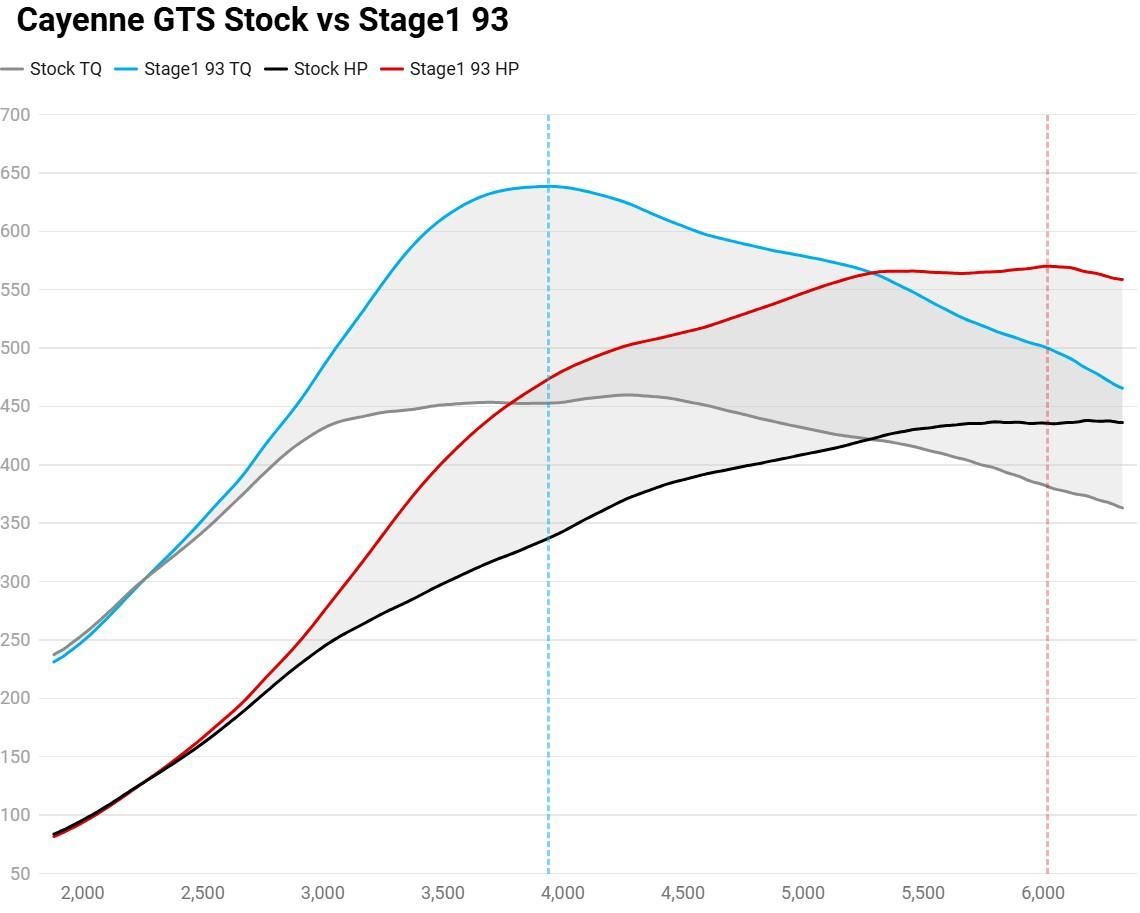
The potential for power gains is impressive on the 9Y0 Cayenne models. This graph shows the difference between stock and tuned torque and horsepower on an otherwise stock Cayenne GTS. The tuned power is even higher than a stock Cayenne Turbo which is mechanically identical.
The potential for power gains is impressive on the 9Y0 Cayenne models. This graph shows the difference between stock and tuned torque and horsepower on an otherwise stock Cayenne GTS. The tuned power is even higher than a stock Cayenne Turbo which is mechanically identical.
There are also some myths that can be dispelled or at least qualified about tuning. Tuning typically won’t significantly alter fuel-economy. However, if you suddenly begin driving more aggressively thanks to a faster tune, your heavier right foot might lead to higher fuel consumption. It’s also common to hear that tuned cars are always less reliable. It's certainly possible to tune a car poorly and cause a myriad of problems, but cars that have been modified and tuned correctly and responsibly should be no less reliable than completely unmodified cars. Asking for more power out of a car doesn’t necessarily mean that limits are being exceeded and a good tuner will be mindful of stock engine components and their capabilities while calibrating the vehicle.
Another big reason many people choose not to tune their car is to retain their factory warranty. Anecdotal stories will relate simplified tales of a warranty being voided because a dealership tech suspected a car was tuned. However, there’s usually more to the story than meets the eye. I recommend having an honest discussion with your preferred service advisor if warranty is a concern.
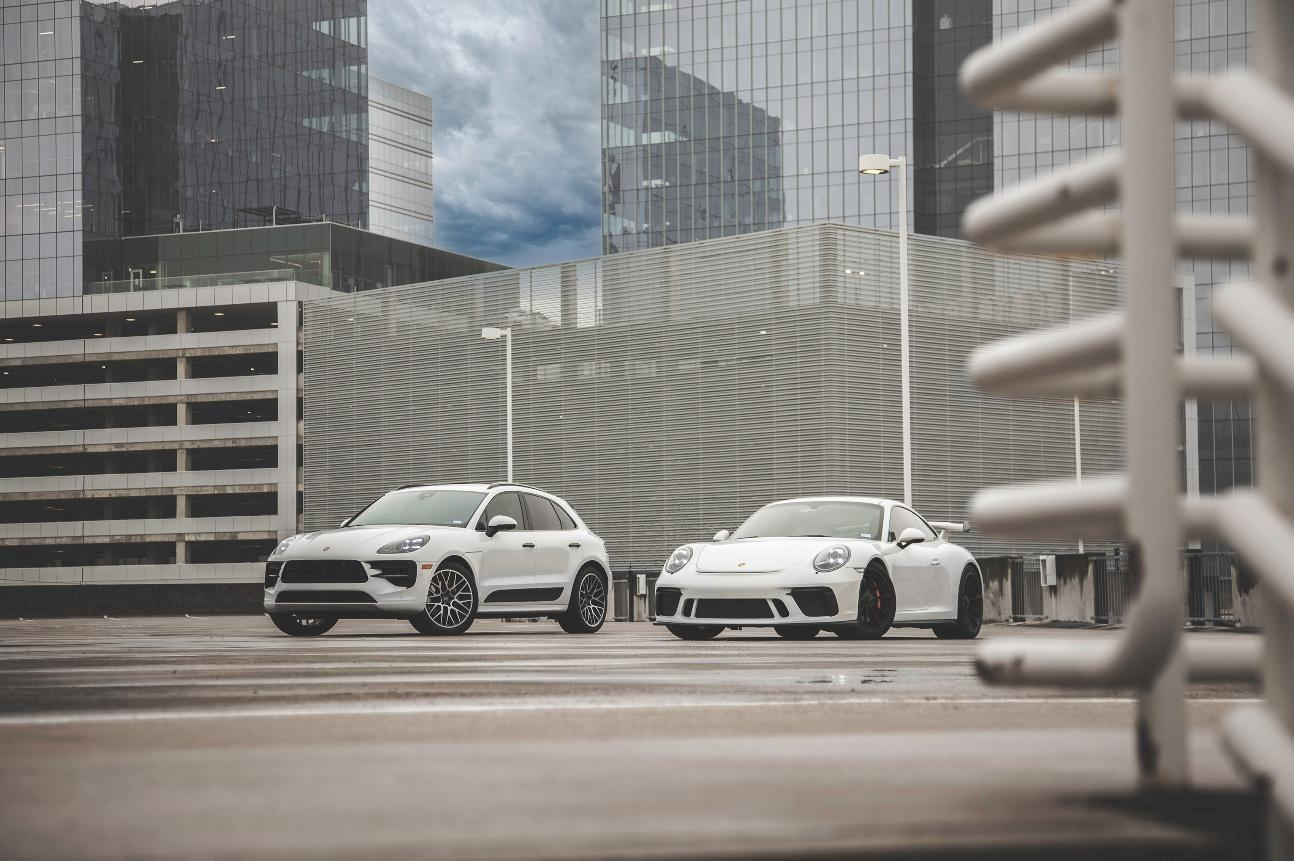
Despite the difference in stock power and price, a Macan can often pick up more power with tuning than a GT3. Tuning turbocharged vehicles can turn the small SUV into a fun back road carver, with room to bring plenty of friends and family along for the ride.

Despite the difference in stock power and price, a Macan can often pick up more power with tuning than a GT3. Tuning turbocharged vehicles can turn the small SUV into a fun back road carver, with room to bring plenty of friends and family along for the ride.
Despite the difference in stock power and price, a Macan can often pick up more power with tuning than a GT3. Tuning turbocharged vehicles can turn the small SUV into a fun back road carver, with room to bring plenty of friends and family along for the ride.
At the end of the day, tuning is simply another tool we have to work on our cars. Like any modification, it’s a personal choice that drivers can make to pursue but it’s absolutely an amazing tool for unlocking the incredible potential that our cars are capable of, be it a track car that is setting faster lap times or a daily driver that we want to feel more connected to while driving to soccer practice. Just because the concepts behind it are getting more complicated, it's just as accessible as it’s ever been. We don’t need to shy away from embracing changes to personalizing our cars. With the right tools, we can go faster in safer, more economical ways. ■




Beyond Stock
Written by Don Stevens & Ernesto Del Valle
Photos by Ernesto Del Valle
Legacy Timing for Modernized Driving
Porsche began incorporating a chronometer into their production cars in 2006 with the introduction of the 997.1 GT3 and the Sport Chrono Package. Those Porsches with a chronometer visible on their dashboards have provided a clear, physical manifestation of a performance upgrade.
Even if a driver rarely, or never, uses the timer function, the presence of the dash-mounted stopwatch visually differentiates their car as a performance-oriented model. This has been a tangible and highly sought-after symbol of a model’s enhanced capabilities and its connection to the cockpit of a race car. But what about the owners of pre-997 Porsches? Might they also have use for a dash-mounted chronometer? And how might you install it so that it's accessible and visible on the dash to augment the performance feel of the car?
The first known appearance of a chronometer in a 911 dates back to the 1965 Monte Carlo Rally. The numbered 147 Porsche 911, which finished second in its class and fifth overall, had a dash-mounted Heuer Rally Master timer like the one pictured to the right. HCR member Ernesto Del Valle’s Beyond Stock story goes back even earlier in time.

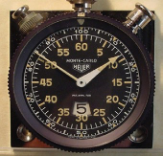
“My grandfather was a total petrolhead. Among his various cars was a 1956 Porsche 356 Coupé in which he installed a pair of Heuer Chronometers. He felt it made the car run faster! After my grandfather passed, the dual chronometer set was handed down to my dad, another gearhead! He installed the chronometers in his Mercedes 300 SL Roadster. Did it make the car faster? No need, it was already the fastest production car of its time! A few years ago, these 60-year-old chronos were pulled out of the drawer and were passed on to me. Unfortunately, they wouldn’t run.”
Upon receiving the chronos, Ernesto felt compelled to continue his grandfather’s and father’s chronometer legacy. He visualized the chronos being mounted in his own G-Body 1985 Carrera 3.2 Targa. But first, he had to get them working. Having an engineering background and being mechanically inclined, Ernesto wasn’t fazed by disassembling the chronos to learn the cause of the problem. The solution turned out to be rather simple – the lubricant had dried out. After some additional research and a little drop of lubricant, Ernesto got the chronos running. The final step was figuring out how to adjust the calibration. Next, he had to install them in his Targa.
Some people choose to make drastic enhancements or personalization to their Porsches. Ernesto’s goal has been to only make nostalgic enhancements that enhance the experience while maintaining his Porsche’s original look, and more importantly, to make enhancements that are reversible. To easily install the chronometers on the dashboard would have entailed drilling holes into the glove compartment lid. But Ernesto couldn’t think of doing such a thing.

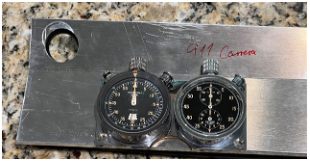
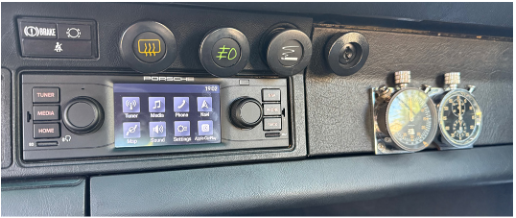
“I discovered it’s possible to remove the glovebox lid cover and expose the metal backing. I devised a replacement lid that allowed me to make tapped holes to secure the chronometers’ backplate. To make this non-original lid look original, I found pigskin in black that exactly matched the pattern of the dashboard. Pigskin? Who knew! The result was incredible; the lid fits seamlessly and with the same pattern as the dashboard.”

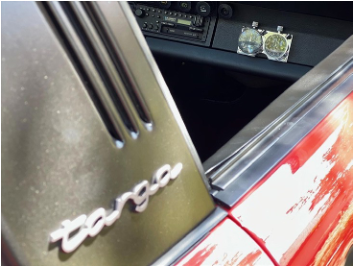
Another customization, and perhaps his favorite and most useful was to replace the factory-installed Blaupunkt Monterey tape deck radio with a PCCM (Porsche Classic Communication Management). The new unit fits into the same slot as the factory radio, so it is non-intrusive and looks like it’s always been part of the car. The screen is quite small, but the unit maintains all the functionality offered by CarPlay.

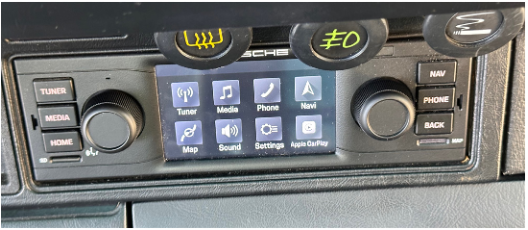

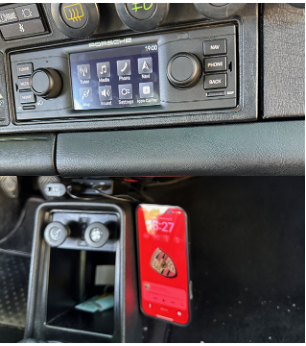
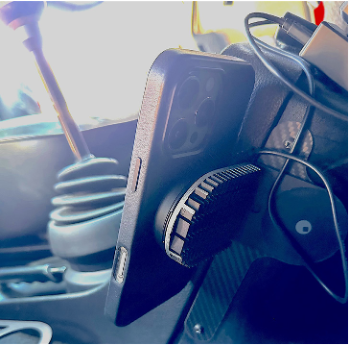
“One shortcoming of the PCCM is that the connection to an iPhone requires the use of a physical cable. There are a ton of devices out there that enable wireless, so the challenge became where to keep the phone? Back to the drawing board – I wanted wireless charging that kept the phone secure and also out of open view. Rennline and other brands offer phone mounts, but all entail having the phone higher up on the dash, often leveraging the ring on the dash clock. In keeping with my philosophy to not permanently modify the look of the car, I devised a plate that would take the wireless charger and attach it to the console on the footwell. Since charging heats up the phone, I added a little set of air-cooling fins. The special bracket is attached to existing tap points on the console and holds the phone out of the way.”


If you have an F or G Body 911 and have an interest in learning more about the enhancements that Ernesto has made to his Targa – email him at delvallehne@gmail.com or chat with Ernesto at an HCR event. ■



Do you have feedback for the Editor? Submit your letters to editor@hcrpca.org
We welcome members’ comments, criticism and corrections. We’ll print what we can, but reserve the right to edit for length and content. If you are an HCR member and would like your photos to be considered for future issues, contact the editor at editor@hcrpca.org. As we continue to make changes with our club publication, we are always looking for new photographers to feature.


 Built with Shorthand